The Constitutional CivicTECH & DPI Architecture: Lossless Governance for Digital Public Infrastructure
Across modern democracies and sovereign nation-states, public service delivery is fundamentally constrained by fragmented departmental silos, legacy batch cadastres, and brittle paper-based notarisation. The onePOI Constitutional Operating System (COS) elevates Public Sector Logistics (PSL) into a unified, high-integrity Digital Public Infrastructure (DPI) substrate. By executing civic attestations as deterministic Packaged Business Capabilities (PBCs) governed by Hohfeldian legal primitives, sovereign CivicHUBs transform public service delivery from bureaucratic friction into instantaneous, verifiable civic actions.
The Eight CivicTECH Packaged Business Capabilities (PBCs)
Civil Registration & Vital Statistics
Cryptographic birth, marriage, and death attestations minted as bitemporal Merkle records with verifiable state provenance.
Sovereign Identity & Attestation
OID4VCI and OID4VP verifiable credentials bound to hardware roots-of-trust, providing zero-knowledge selective disclosure.
Public Payments & Safety Nets
Programmable municipal disbursements and social welfare distribution over real-time A2A rails with zero leakage.
Land & Property Cadastre
Cryptographically anchored spatial boundaries, title deeds, and automated transfer tax settlements on bitemporal ledgers.
Healthcare Attestation & Exchange
Citizen-governed clinical data vaults, cross-border health attestations, and sovereign clinical audit trails.
Educational Credentialing
OpenEMIS integrated UNESCO ISCED lifelong learning diplomas, skills attestations, and micro-credential verification.
Judicial & Administrative Justice
Tamper-evident court filings, evidentiary deposition HyperDAGs, and automated constitutional compliance proofs.
Tax Administration & Revenue
Split-second automated VAT/GST withholding and real-time transaction reporting at the point of interaction.
Four Statutory Legal Artifacts
In accordance with administrative law and constitutional jurisprudence, onePOI mints four statutory legal instruments directly within hardware enclaves with full evidentiary standing:
Five-Stage Civic Action Lifecycle
Every public sector engagement traverses a deterministic, five-phase constitutional enforcement lifecycle:
The Crisis of Fragmented Civic Infrastructure
Public authorities face an acute structural paradox: escalating statutory duties for welfare, public health, and social care paired with relentless budget contraction. Traditional "digital-by-default" mandates have driven service desks from local communities into fragmented online portals – leaving vulnerable citizens excluded while locking agencies into rigid, single-vendor cloud silos.
Meeting the EU AI Act (High-Risk Annex III), eIDAS 2.0 digital identity frameworks, GDPR Article 5(2) accountability, and statutory cash access mandates cannot be achieved through isolated department budgets. By anchoring a multi-tenant phygital cohort, public bodies transform physical community estates into shared, revenue-generating civic infrastructure.
Fragmented Service Estates & Citizen Pinball: Councils, NHS trusts, DWP, and tax authorities run isolated databases. Vulnerable citizens must prove eligibility repeatedly across multiple locations, slipping through institutional gaps.
Digital Exclusion of Vulnerable Populations: Over 1.4 million unbanked adults and millions more without broadband or smartphones are systematically abandoned as physical high street branches and council customer centres close.
Forensic Audit Overhead & Black-Box Risk: Compliance with GDPR, AI Act safety rules, and public procurement audits is assembled manually from server logs, creating high legal exposure and catastrophic failure risks (e.g. Horizon-style scandals).
Single-Tenant Estate Desertification: Council offices and bank branches cannot sustain standalone operating expenditure, resulting in empty high streets and rural service deserts.
The Government Anchor Proposition
Anchoring a cohort equips public authorities with a sovereign capability no commercial procurement framework can provide: a constitutional operating system that renders access, accountability, and evidence generation automatic.

Universal Reach & Physical Inclusion
Multi-tenant POI Appliances deployed across municipal libraries, town halls, and rural hubs deliver continuous access in offline Autonomous Edge Resilience mode via Isomorphic Stanzas. Even during telecom blackout, civic workflows proceed uninterrupted. Co-located commercial domains operate in hardware-encrypted TEE Enclaves secured by Threshold Cryptography (MPC) key splitting.
POI Appliance architecture →
Court-Admissible Accountability
Every civic interaction yields an immutable, bitemporal LAHE (Lawful Act Hardware Evidence) record anchored in the System of Record and metered via GaaS Micro-Royalties. Algorithmic recommendations are constrained in symbolic action spaces via the Neuro-Symbolic Sandwich, enforcing an automatic Structural VETO on any administrative rule violation.
System of Record →
One Identity Layer & Amnesiac Privacy
oneWallet unified credentials conform to eIDAS 2.0 High and the European Digital Identity (EUDI) wallet standard, resolving cross-agency eligibility via Zero-Knowledge Proofs. We reconcile public audit mandates with GDPR Article 17 erasure through PAIF Cryptographic Shredding of ephemeral biometrics and memory upon session completion.
oneWallet & sovereign identity →Two Civic Leadership Mandates
The Public Sector Dual Value Stack: CivicOps vs RegOps
Municipal leaders, local authority chief executives, and public infrastructure directors face two simultaneous imperatives: expand frontline service access and financial velocity for citizens while enforcing mathematical compliance across statutory mandates, procurement law, and AI safety regulations.

CivicOps Stack
-
Automated Welfare & Emergency Grant Payouts
Execute real-time Account-to-Account welfare disbursements directly upon verified entitlement attestation. Collapse emergency relief processing from 14 days to under 500ms (target metric – Q4 2026 / 2027 roadmap) without bureaucratised paper friction.
-
24/7 Unstaffed Civic Service Pods & Deserts Eradication
Deploy rugged, multi-tenant CivicHUB POI appliances across unstaffed libraries, post offices, and community halls, providing continuous municipal credential verification and document collection without council desk overhead.
-
Estate CapEx Reclaim (60% to 80% Cost Reduction)
Replace expensive dedicated single-agency kiosk estates and branch leases with shared multi-tenant appliances. Cross-subsidise civic premises by hosting commercial and banking tenants inside isolated Silicon Apartments.
-
Universal Digital Inclusion & Offline Continuity
Provide zero-standing-privilege biometric MFA and offline island-mode verification, guaranteeing that digitally excluded citizens retain full dignity and unbroken access during wider network outages.

RegOps Stack
-
EU AI Act High-Risk Annex III Automated Compliance
Constrain all public sector algorithmic decisioning inside formal Agreement DAGs. Enforce automatic hardware Structural VETO on any administrative rule violation, preventing discriminatory or unexplainable automated harms.
-
Automated FOI & Ombudsman Evidence Bundles
Generate court-admissible bitemporal evidence bundles (valid-time and transaction-time) for every civic administrative determination, resolving judicial reviews and ombudsman complaints in minutes rather than months.
-
Continuous Statutory Living Wage & Supply-Chain Verification
Cryptographically audit public tender suppliers in real time for domestic living wage compliance, local labour apprenticeships, and social value metrics directly through payroll telemetry.
-
eIDAS 2.0 & Amnesiac Privacy Shredding (PAIF)
Guarantee GDPR Article 17 erasure through hardware Wipe Attestation Signatures (WAS) and PAIF cryptographic shredding of biometric memory upon session close, eliminating municipal data breach liabilities.
Local Authority as Cohort Anchor
A county council or municipal authority with statutory responsibilities for community well-being anchors a cross-sector cohort – deploying shared CivicHUB appliances across town halls, libraries, community centres, and rural post offices. Multiple public and commercial tenants deliver services through the same constitutional substrate without building standalone kiosk estates.



County Council
Authors constitutional axioms for public data handling. Provides identity governance and civic service access. Satisfies digital inclusion mandate without building standalone service centres.
Tier 2 Bank – Access to Cash
Meets UK PSR Access to Cash obligations via the shared appliance estate. Banking, account services, and cash access delivered in the community, not a distant branch.
NHS Trust & Care Board
Appointment booking, prescription management, and biometric patient identity verification – all operating under the council's constitutional governance without a separate NHS kiosk estate.
DWP / Benefits Agency
Privacy-preserving welfare eligibility checks and benefit disbursement via oneWallet – reaching unbanked claimants at the POI Appliance closest to them.
How a Public Sector Led Cohort Works
Traditional public sector IT procurement forces agencies into vendor lock-in, proprietary cloud subscription models, and forensic post-mortems when systems fail. Grounded in second-order cybernetics and first-principles distributed systems, the onePOI.online framework establishes mathematical certainty at the edge through deterministic policy enforcement.

First-Order Deontic Dominance
All civic actions conform to the mathematical hierarchy \(\mathbf{F} \succ \mathbf{O} \succ \mathbf{P}\) (Forbidden dominates Obligated, which dominates Permitted). Policies compiled into Agreement DAGs run inside hardware TEE enclaves under human TopHAT and tenant quorum, guaranteeing that no algorithmic decision can violate statutory human rights or administrative law.

The Structural VETO
Traditional public IT leaves civil servants to shoulder the liability of black-box code failures (such as Post Office Horizon or Robodebt). In the onePOI.online framework, the Neuro-Symbolic Sandwich subjects every proposed action to automated SMT satisfiability solvers. If policy invariants are breached, the system executes a deterministic Structural VETO before state execution.

The Self-Funding GaaS Engine
Rather than taxing community budgets, civic IT becomes an autonomous revenue generator through Governance-as-a-Service (GaaS). Commercial tenants (banks fulfilling statutory cash obligations, logistics operators hosting smart lockers, telcos deploying 5G edge compute) pay micro-royalties (0.01€ – 0.05€) per executed LAHE to the council, fully funding local maintenance.
Target State Metric Mandate (Q4 2026 / 2027 Roadmap)
| Architectural Dimension | Legacy Government IT Baseline | Target State Architecture (onePOI.online) | Statutory & Economic Value |
|---|---|---|---|
| Infrastructure CapEx | 100% single-tenant redundant hardware | Target 60 – 80% CapEx reduction via pooling | Pooled community assets across multiple agencies |
| Audit & Evidence Assembly | Weeks of manual forensic log-scraping | Target <500ms automated MVEB generation | Instant court-admissible proof for ombudsmen & auditors |
| Network Availability | Immediate outage upon broadband severance | Target 99.999% availability via Isomorphic Stanzas | Local civic resilience during extreme weather/blackouts |
| PII Data Exposure | Centralised honeypots subject to breach | Zero plaintext retention via PAIF Shredding | Eliminates GDPR breach liability by physical construction |
Public Sector Use Cases
From revitalising rural high streets to executing fraud-immune welfare relief, the public-sector cohort substrate transforms how civic bodies deliver high-assurance services.
The Rural CivicHUB Mesh: High Street Regeneration
Councils facing post office closures and bank branch desertification deploy multi-tenant CivicHUB POI Appliances inside public libraries and municipal centres. Citizens access council tax reduction, housing permits, health bookings, and surcharge-free cash from a single physical station – restoring essential community footfall.

Targeted Crisis Grants & Stigma-Free Relief
Emergency heating allowances, flood disaster relief, and school meal vouchers are issued directly into citizen oneWallets as programmable Ricardian tokens. Tokens settle instantly over real-time A2A rails with zero card scheme interchange tolls, restricted automatically to participating local food and utility vendors.

Integrated Health & Adult Social Care Handover
Hospital discharge delays often result from administrative gridlock between NHS acute trusts and council social care teams. The cohort's shared System of Agreement executes consent contracts with cryptographic auditability – coordinating patient transport, home adaptations, and care visits without exposing raw medical records.
Sovereign Algorithmic Accountability & FOI
Every automated public decision – including council tax discounts, planning pre-checks, and school place allocations – outputs a formal mathematical proof bundle (MVEB). Judicial reviews, ombudsman appeals, and Freedom of Information (FOI) requests are fulfilled instantaneously from the bitemporal ledger, proving mathematical non-discrimination.
Salient FinTech Innovation Set
The Sovereign Trust Engine at the Core
Municipal counters and public services sit inside the wider Salient Innovation Set, anchored by the Salient FinTech Innovation Set at its base. Because every welfare disbursement, permit fee, or identity attestation resolves into a regulated settlement or fiduciary duty, bare-metal BIAN messaging, real-time SEPA Instant and A2A rails, Token Gantry credentials, and bitemporal ledgers supply the verifiable trust backbone for public-sector Tenant Cohorts.
For public sector authorities, this FinTech trust engine powers autonomous Governance-as-a-Service (GaaS) micro-royalties, real-time account-to-account welfare disbursements with zero intermediary skimming, and statutory cash access mandates via BIAN-native cash recycling peripherals – transforming civic IT from a cost overhead into an auditable sovereign trust platform.

BIAN Civic PBCs
Standardised Process Boundary Components integrating municipal desks directly with banking and healthcare APIs.

Real-Time A2A Rails
Instant account-to-account welfare payments and grant disbursements bypassing predatory third-party payment processors.
Token Gantry
Citizen data and benefit credentials shielded behind Zero-Knowledge commitments, eliminating council honeypot vulnerabilities.

Bitemporal Ledgers
Immutable dual-timeline evidence chains guaranteeing instant FOI, judicial review, and ombudsman dispute resolution.
Civic-to-Clinical Confidential Welfare & Healthcare Dispatch
Where municipal public services intersect with clinical healthcare and sovereign banking rails, social care silos collapse into confidential, dignified community delivery.

Hardware-Attested Social Care & Clinical Binding
Civic welfare entitlements, social prescribing referrals, and clinical triage orders bind directly to BIAN v14.0 Health and Social Care Process Boundary Components inside Token Gantry TEE micro-enclaves. At sub-50ms line rate attestation (target metric – Q4 2026 / 2027 roadmap), vulnerable citizens unlock subsidised medical prescriptions and social care support without exposing sensitive medical diagnoses or psychiatric records to municipal desk staff.
Automated Outcomes-Based Care Clearing
Replaces slow, error-prone municipal invoicing cycles with automated real-time settlement. When an attested care milestone commits (e.g. domiciliary carer home attendance, prescription collection at a local LockerSHOP), real-time Account-to-Account rails (SEPA Instant / Faster Payments) release funds directly from ring-fenced council budgets within 500ms (target metric – Q4 2026 / 2027 roadmap).
The POI Appliance as a Clinical Sanctuary
Community care routinely fractures because public health and civic welfare operate in defensive data silos. By transforming the shared municipal POI appliance into a cryptographic clinical sanctuary, hardware Wipe Attestation Signatures (WAS) allow citizens to complete vital health consultations, triage, and pharmacy collections in complete privacy, bridging healthcare deserts while protecting personal dignity.
Foundational FinTech Core Unity
Governed by Deontic Agreement DAG Adjudication (&mathbf;F; ≻ &mathbf;O; ≻ &mathbf;P;) and bare-metal BIAN v14.0 execution.
Municipal Civic Service Integration via Phygital Retail Lockers
Where municipal public administration interfaces with high-density commercial retail locker networks, civic deserts transform into accessible 24/7 service hubs.
Unified Credential LockerSHOP Binding
Municipal credential issuance (passports, national ID cards, driving licences, local welfare entitlement tokens) unifies directly with high-density commercial LockerSHOP nodes via Token Gantry cryptographic attestation. Secure Element microchips and eIDAS 2.0 biometric verification authenticate citizen collection without human intermediary handling.
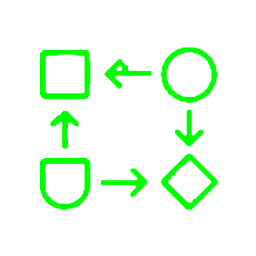
Queue Eradication & Footfall Convergence
Phygital convergence permanently eradicates council customer service queues and postal transit loss. Commercial retailers capture consistent, footfall-driven civic visits that convert into in-store retail expenditure, while municipal councils achieve 24/7 secure physical document fulfilment at 60% to 80% lower operational expenditure (target metric – Q4 2026 / 2027 roadmap).
Shared Real-Estate Overcomes Civic Deserts
High-street retailers and municipal councils share identical real-estate, operating overhead, and citizen touchpoint challenges. Pooling physical presence inside a shared, multi-tenant Point of Interaction (POI) appliance resolves both deficits simultaneously, turning rural and suburban civic deserts into vibrant, sustainable community hubs.
Foundational FinTech Core Unity
Governed by Deontic Agreement DAG Adjudication (&mathbf;F; ≻ &mathbf;O; ≻ &mathbf;P;) and real-time A2A rails (<500ms municipal fee settlement, target metric – Q4 2026 / 2027 roadmap).
Arthur's Journey: The Dignity of Universal Civic Access
Follow Arthur, a 71-year-old pensioner and family carer in a rural market town, as he navigates public services on onePOI.online. See how a shared CivicHUB appliance, sovereign eIDAS 2.0 digital identity, and cross-agency Agreement DAGs replace bureaucratic exclusion with universal access and instant, court-admissible dignity.
Joining the Dots: Cross-Sector Arbitrage & Set-Theoretic Proofs
Grounded in the Tri-Axial Set Theory Relationship Mapping (STRM) and ADR-R26-20261022-LACE-COS, the following cross-sector architectural seams reveal how shared BIAN v14.0 financial primitives and LACE Logical Services (Services 1 to 5) unlock high-margin, zero-commingling value across partner Tenant Cohorts.
Counterfactual Causal Simulation Gates for Civic Infrastructure & Smart Grids
Cross-Cohort Structural Convergence
Construction & Engineering cohorts (EPC) manage 7D Cognitive Digital Twins, automated FIDIC / NEC4 milestone contracts, and high-voltage microgrid actuators, while Public Sector Led cohorts (PSL) oversee municipal utilities, flood-defence barriers, public transport corridors, and statutory procurement budgets.
LACE × COS Emergent Capability
Before any autonomous FIDIC contract variation, municipal grid load-shedding command, or civil engineering actuator is permitted to execute in the physical world, LACE Service 4 (Counterfactual Simulation & ForkBranch Engine, elem-lace-srv-4) and oneCDE.online (elem-comp-onecde) clone the live bitemporal graph state into an isolated copy-on-write sandbox (`ForkBranch`). The Formal Verification Engine (Z3 SMT and Lean 4) simulates $N$-step structural, fiscal, and statutory cascade effects across both the EPC Digital Twin and the Municipal Treasury Ledger. DRAGON (elem-comp-dragon) issues a Lawful Warrant if and only if the counterfactual delta proves zero safety-envelope breach and zero municipal budget overrun.
Verifiable Executive Paradigm Shift
Municipalities and Tier-1 EPC contractors replace post-disaster inquiries and multi-year FIDIC arbitration deadlocks with pre-execution mathematical proof of structural and fiscal safety, cutting civil Variation Order dispute cycles by 70% to 85% (target metric – Q4 2026 / 2027 roadmap).
Under the STRM Axis 1 Crosswalk, oneCDE_online (SUPERSET_OF LACE Service 4, $|A \cap B| = 5$) and DRAGON (INTERSECTS LACE Service 4, $|A \cap B| = 4$) enforce the Non-Contradiction and Deontic Dominance invariant ($\mathcal{F} \succ \mathcal{O} \succ \mathcal{P}$) across every simulated state branch before Conductor commits the physical or financial mutation.
Validated counterfactual milestones bind directly to PBC-2 Escrow & Milestone Settlement (SD-SET-07) and statutory Project Bank Accounts (PBAs), releasing progress payments to Tier-1 to Tier-4 subcontractors atomically upon verified digital-twin completion.
Triadic Custody Separation for Disaster-Resilient Civic & Humanitarian Relief
Cross-Cohort Structural Convergence
Third Sector & Non-Profit humanitarian agencies (NGO) and Public Sector Led civil-protection authorities (PSL) disburse emergency Cash & Voucher Assistance (CVA), disaster-relief grants, and municipal social welfare in degraded, fiber-cut, or contested environments where both fraud prevention and beneficiary privacy are mission-critical.
LACE × COS Emergent Capability
Enforcing ADR-R26-20261022-LACE-COS Safeguard S05 (Triadic Custody Separation) alongside LACE Service 3 (10,000-Bit Hyperdimensional Computing / Vector Symbolic Architecture Engine, elem-lace-srv-3), the platform splits relief governance across three mutually disjoint capabilities: Registrar holds the admitted beneficiary entitlement rules and 9-Category xBOM state; Notary seals the out-of-band QTSP delivery receipt; and KeyMESH controls the post-quantum ML-DSA-87 signing keys. During complete backhaul blackouts, field POI appliances verify beneficiary entitlement offline using 10,000-bit HDC/VSA algebraic vectors and store-and-forward CRDT ledgers.
Verifiable Executive Paradigm Shift
Humanitarian donors and public audit offices achieve zero-leakage, double-spend-proof offline aid disbursement during communications blackouts, while structurally guaranteeing that no single compromised field terminal, cloud administrator, or agency insider can forge a disbursement or deanonymise vulnerable refugees.
Verified in the STRM Axis 1 Crosswalk: Registrar (elem-comp-registrar), Notary (elem-comp-notary), and KeyMESH (elem-comp-keymesh) maintain pairwise orthogonal custody separation (`S05`), while KnowledgeHUB and iEngine bind to LACE Service 3 (elem-lace-srv-3) for sub-millisecond 10,000-bit HDC/VSA similarity verification at the disconnected edge (target metric – Q4 2026 / 2027 roadmap).
Offline CRDT voucher redemptions reconcile deterministically into PBC-2 Payment Execution (SD-PAY-05) and donor grant-escrow ledgers the instant satellite or mesh connectivity resumes, providing court-admissible MVEB audit finality for every penny of public and philanthropic aid.



The Horizon Immunity Principle
Field → Finance → Shelf → Neighbour
Economic value originates in the field, is capitalised through finance, realised on the retail shelf, and finally lands in the neighbourhood. A Public-Sector-Led cohort anchors the Neighbour stage.
Public-Sector-Led cohorts anchor the Neighbour stage, binding civic services, community healthcare, and cash access that keep the local precinct viable. This is where value originated in the field, financed by banks, and distributed via retail finally lands in the community it was created for.
Ready to Explore Your Civic Fit?
From €2,500*, a tailored Discovery & Positioning Sprint maps the Salient Innovation Set directly to your municipal mandate, public estate footprint, and statutory obligations – delivering a clear tenant co-location model and projected civic revenue blueprint before major capital spend.
Liquid Programmable Surety & Counterfactual Civic Twins: EPC ↔ FSI ↔ PSL
7D BIM + CycloneDX PBOM + Hohfeldian Standing
Integrates 7D BIM (ISO 19650) digital twins, LiDAR/RFID progress telemetry, and Registrar 9-Category CycloneDX 2.0 xBOM (PBOM structural materials + HBOM grid hardware + SBOM OT firmware) with Hohfeldian Normative Separation, LACE Service 4 counterfactual simulations (FI-18), and Token Gantry programmable escrow.
Sensor Evidence ≠ Chartered Certification Power
Enforces the critical COS-FOUND-20261028 & FI-14 Seam 2 guardrail: an IoT sensor reading supplies BRB/ER factual evidence, but never holds the second-order Hohfeldian Norm of Power to certify structural completion or release escrow. Only when LACE counterfactual municipal grid twins verify zero overload AND a chartered engineer in TopHAT signs the FIDIC/NEC4 warrant does Token Gantry mint Liquid Programmable Surety Tokens (LPST) and settle via SEPA Instant / TIPS (Tier 1) or CHAPS / FedNow (Tier 2).
Zero-Dispute Retention Liquidity
Construction finance no longer has to choose between 90-day paper certification delays and reckless sensor-triggered payouts. By separating BRB/ER site telemetry from the Hohfeldian legal power of a TopHAT-accredited surveyor, Tier-2/3 subcontractors unlock trapped 5%–10% retention capital on day one while municipal authorities gain mathematical proof of structural and grid safety.